"There was a time when a fool and his money were soon parted, but now it happens to everybody." Adlai Stevenson

Recession-Proof Portfolio

I’m late to the party with my recession talk, because if you believe the news “there’s no recession” and we’re back in the bull market:


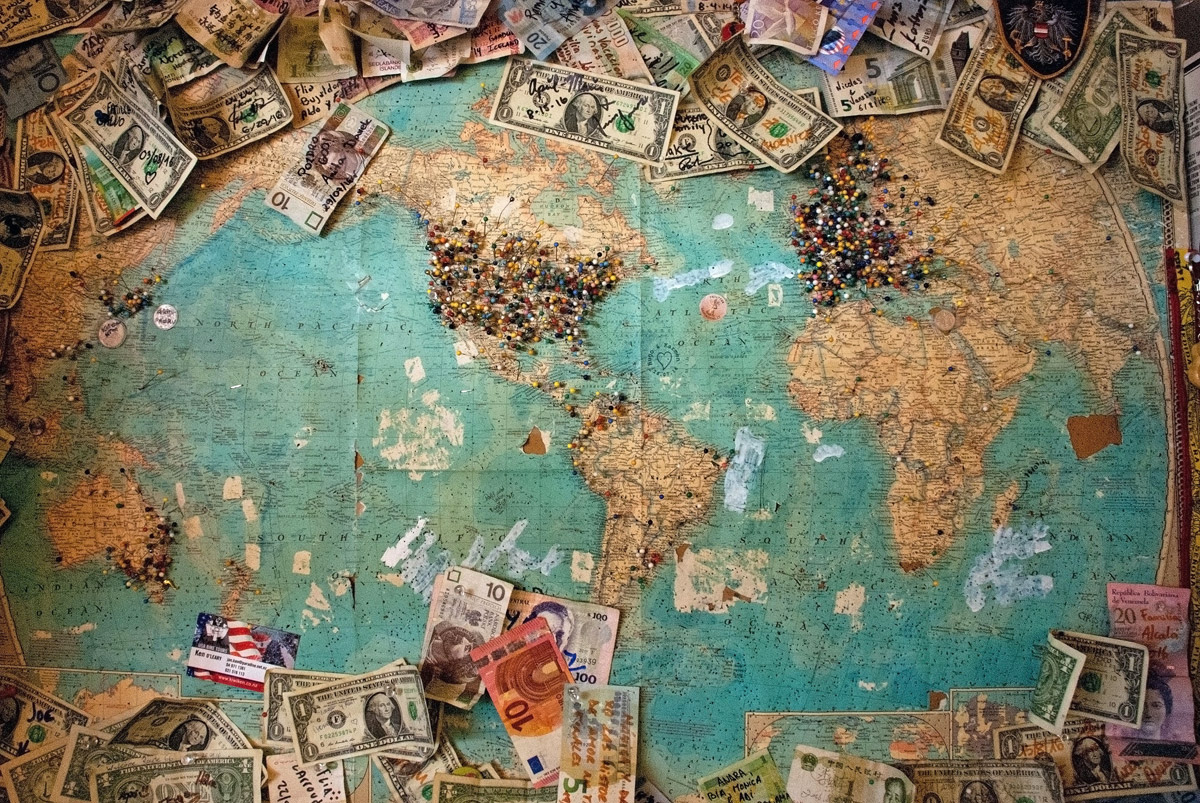
Image © waɪ.tiː

But, here it goes anyway. A typical recession-proof portfolio consists of:

  • large-cap companies with stable growth and solid dividend
    ha, banks were supposed to be like that
  • consumer staples stocks (food, alcohol, tobacco, household and personal care essentials)
    frankly, alcohol is so expensive in Canada, in case of a recession it would be the first to go for us
  • healthcare
    this should be in the above category among “consumer staples”, because that’s what Valium and Viagra are by now; but seriously, Healthcare REITs might be a smart move
  • bank deposits (cash)
    not too much, if inflation is running high and interest rates are low
  • foreign investments
    you’d have to rely on analyst opinions with these, and that’s just not a good strategy; however I don’t mind Switzerland and their money

The Greedy Pay Twice

We have a saying “the greedy pay twice”. The cheapest most definitely isn’t always the smartest or the most frugal thing to do. Yes! sometimes it’s more frugal to pay more.

The economic benefit of paying as little as possible to save money is lost if you have to pay the second time to fix the result.

A couple of anecdotes:

  • Last year I dyed my hair at home, and had to pay the hair dresser to have the color fixed. Color corrections cost more than a simple dye job. Have I learned the lesson? You bet.
  • We bought a fairly expensive item ($1,300) last year from a small store. The owner gave us a discount, but his return policy is “no returns”. The item turned out to be not what we wanted and we ended up having to re-sell it on Ebay, taking a monetary hit, of course. In the end we lost more than we saved, not to mention all the time and worry of selling on Ebay.

The Common Law of Business

“It’s unwise to pay too much, but it is worse to pay too little. When you pay too much you lose a little money – that is all. When you pay too little you sometimes lose everything, because the thing you bought was incapable of doing the things it was bought to do. The common law of business balance prohibits paying a little and getting a lot. It can’t be done if you deal with the lowest bidder, it is well to add something for the risk you run, and if you do that you will have enough to pay for something better”

John Ruskin (1819-1906)

I can see how this applies to much more than just business, here’s a few very simple examples (no propaganda this time, too much for one week):

  • Cheaply made goods that fall apart
  • Service that you bought for so little, service provider wasn’t able to stay in business. And so you have to move on to someone else which costs you time and money all over again.
  • Eating low quality, cheap food and then falling sick due to bad diet. Health lost can’t really be quantified, it’s the worst.

… and so on.

Neuroeconomics

I’m reading Your Money and Your Brain (How the new science of neuroeconomics can help make you rich) by Jason Zweig.

“I’ve been a financial journalist since 1987, and nothing I’ve ever learned about investing has excited me more than the spectacular findings emerging from the study of ‘neuroeconomics.’ Thanks to this newborn field – a hybrid of neuroscience, economics, and psychology – we can begin to understand what drives investing behavior not only on the theoretical or practical level, but as a basic biological function. These flashes of fundamental insight will enable you to see as never before what makes you tick as an investor.” - Jason Zweig

In the very first chapter, Mr. Zweig writes about Harry M. Markowitz, winner of Nobel Prize in economics. He won the prize largely for the mathematical breakthrough that he had been incapable of applying to his own investing portfolio. Really, it’s by far easier to teach, than to do. No offense to teachers.

A few other interesting observations:

  • People who keep up with the news about their stocks earn lower returns than those who pay almost no attention.
  • “Professional” investors, on average, do not outperform “amateurs”.
  • The neural activity of someone whose investments are making money is indistinguishable from that of someone who is high on cocaine or morphine.
  • After two repititions of a stimulus - like, say, a stock price that goes up one penny twice in a row - the human brain automatically, unconsciously, and uncontrollably expects a third repetions.
  • Expecting both good and bad events is often more intense than experiencing them.

This is just the beginning, and I’m already starting to understand, that to actively trade stocks successfully, one has to fight a lot of subconscious responses deep in the brain. Essentially, the task is to fight our human nature.

That’s what a lot of people like about Technical Analysis (TA). It removes all or most of emotions out of making decisions. I’m finding TA extremely useful. I’m much less emotional in my trading, but still impatient.

I’m concentrating on learning more about myself and about TA. Both help control impulses in trading and investing.

Will return to posting my P&L numbers at the end of May. It’s been a bit over a year since I started trading and investing, so a summary might be interesting. Oh, the suspense! Am I winning or losing?

Vote Against Bill C-33, Canadian Biofuels Subsidy

This insanity is contagious, please vote and stop it.

Bill C-33 provides a $2.2 billion subsidy for biofuels and requires that all gasoline include 5% biofuel content by 2010.

Yet there is increasing evidence to show that the rush to biofuels will do more environmental harm than good. And converting food crops to fuel, amidst a serious food crisis, is increasing food prices and speculation.

This is putting food further out of reach of millions of hungry people and is a “crime against humanity,” says United Nations Special Rapporteur on the Right to Food, Jean Ziegler.

Any day now, Bill C-33 could come up for 3rd and final reading and vote in Parliament.

Please write immediately and ask Opposition Parties to vote NO to Bill C-33. If your MP is a Liberal, this is especially important, as they are split on the issue.

First Solar (FSLR)

It’s like year 2000 all over again! Have you seen p/e ratios like this recently?

FIRST SOLAR, INC.(NasdaqGS: FSLR)
Last Trade: $278.57
Market Cap: 22.20B (!)
Revenue: $600M (!)
P/E: 110.81
EPS: $2.51 (!)

FSLR fans say that it’s a revolutionary new industry, and if you were so cautious with P/E ratios you’d also miss on Google’s ride up.

The thing is, Google came up on the second Internet wave, when a lot of dot com pitfalls were clear. Solar power generation is still an uncharted territory. The risks are numerous:

  • FSLR solar panels are made with the rarest stable element on earth - tellurium
  • tellurium is not only rare, it’s toxic; at a later date it may be found that any environmental benefit gained doesn’t outweight its risk
  • solar industry relies on government subsidies which can dry up any time; case in point - just this week, German government proposed to cut their subsidies by 30%

And seriously, who in their right mind would pay up to $300 for a stock with that kind of earnings? Any future growth potential is built-in a hundred times over. Speculator’s paradise, until it isn’t.

Déja Vu (”Get Mad”)

Next Page »